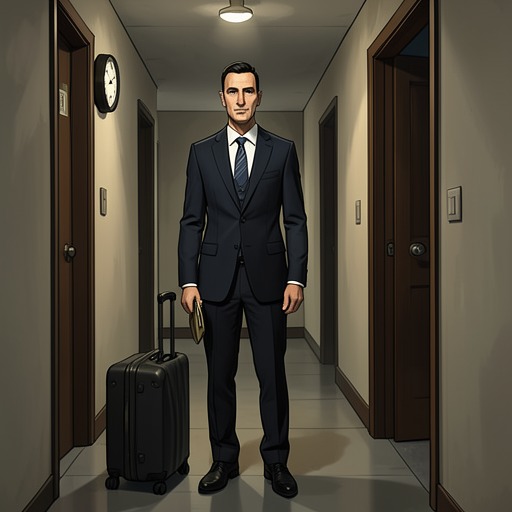
Daniel saves Natasha from being hit by a car
The Sun is Also a StarDaniel Jae Ho Bae saves Natasha Kingsley from a car running a red light at a New York City crosswalk. The rescue turns a near collision into their first consequential act of contact: Daniel prevents Natasha from stepping into the BMW’s path, but the fall damages her phone and the pink headphones that have accompanied her through the scene. The immediate aftermath is not uncomplicated relief. Natasha recognizes that Daniel saved her life, yet she is distressed, and the encounter ends with her saying she is having a very bad day.
The Approaching Danger
The scene begins with Natasha ahead of Daniel at a crosswalk. He insists in his narration that he is not following her; they are simply going the same way. That qualification gives the approach a wary, slightly awkward quality. He can see her bright pink headphones and the way she sways to her music, but not her face. He guesses that her eyes are closed. When she misses a walk cycle and he ends up directly behind her, he imagines that she would take his proximity for stalking if she turned around. His attention is therefore divided between concern for her and awareness of how his presence might appear.
The danger becomes immediate when the light turns red and Natasha steps off the curb. She is not watching closely enough to notice a white BMW about to run the light, while Daniel is near enough to act. The contrast is central to the event: her absorbed movement carries her toward danger, and his attention to the street gives him the chance to intervene. The scene does not present the rescue as a considered plan. Daniel sees what is about to happen and responds before the car reaches her.
The Rescue and Its Cost
Daniel yanks Natasha backward by the arm. Their feet tangle, and they fall onto the sidewalk, with Natasha landing partly on top of him. The intervention prevents her from continuing into the BMW’s path, but it is abrupt and physically disorienting rather than graceful. Her phone strikes the pavement and its screen is left with several cracks. A few passersby ask whether the two are all right; most walk around them, treating the fallen pair as another obstacle in the crowded city. The brief difference between those reactions makes the public setting part of the aftermath: the accident is visible, but attention from strangers is limited.
The car pulls over on the next block. Daniel looks toward it and wants to confront the driver, but stays with Natasha instead of leaving her alone. That choice keeps the scene focused on the person he has just pulled from danger, even as the stopped car offers another possible response. His concern is immediate, though the damage is not confined to the phone. Natasha is holding her headphones, one ear pad dangling by its wires and the casing cracked. She asks how long she has had them, and Daniel initially mistakes her question as being about the phone. Her distress makes clear that the rescue has left her with losses she can see and touch, even as the more serious harm has been averted.
The Aftermath Between Them
Daniel offers to buy Natasha another pair of headphones. He explains that he is desperate to keep her from crying, not because he considers himself noble but because he tends to cry when other people cry. His self-description gives the offer a mixture of concern and self-consciousness: he wants to comfort her, while also trying to head off an emotional response he knows may spread to him. Natasha presses her lips together and shakes her head rather than accepting. Daniel insists that replacing them is the least he can do, but she answers that he has already saved her life.
Their exchange establishes a difference in what each is measuring. Daniel attends to the damaged possessions and offers restitution; Natasha sets those losses against the danger he prevented. He tries to lighten the moment by suggesting that she might have been maimed rather than killed, but the attempt does not make her laugh. Her eyes fill with tears, and she says that she is having the worst day. The scene therefore does not end with the rescue resolving her distress. It leaves the two of them face to face with both the immediate near miss and a sadness Daniel cannot repair by replacing the headphones.
Narrative Significance
The event changes the value of an ordinary walk across the street in an instant: a missed signal becomes a threat to Natasha’s life, and Daniel’s split-second action turns danger into a fall and damaged belongings. The phone and headphones register that cost without equating it with the harm avoided. In particular, the headphones are not incidental decoration. They have marked Natasha’s movement through the scene, and their broken condition becomes the first visible subject of her attention after the fall. Daniel’s rescue thus brings the two characters into closer contact while also creating an awkward obligation he cannot discharge simply by offering to buy a replacement.
The narration stays close to Daniel’s perspective, including his fear that Natasha could mistake his position behind her for stalking and his candid admission that other people’s crying affects him. The reader learns about the danger through his attention and his action, while Natasha’s experience appears through what she says and the damaged objects she handles. Her acknowledgment that he saved her life confirms the stakes between them, but her tears and account of a terrible day resist a tidy, celebratory ending. The rescue is decisive in preventing the collision; its immediate consequence is a fragile encounter rather than an instant solution to Natasha’s troubles.